Vill du veta när vi publicerar nya filmer?
Anmäl dig för att få utvalda filmer till din inkorg via mail eller sms.
Anmäl dig här
43:27
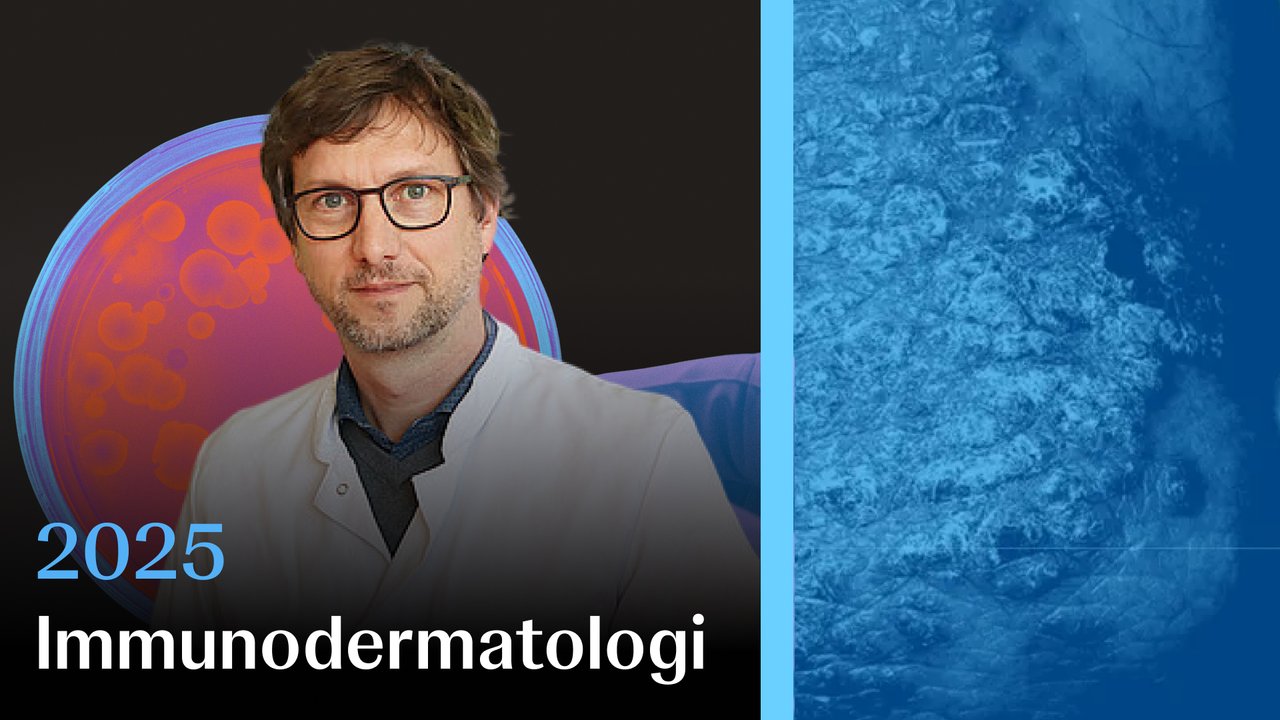
The meeting begins with introductions, welcoming Professor Diamant Thaçi, a dermatologist and researcher specializing in inflammatory diseases at the University of Lübeck, Germany. Diamant Thaçi goes on to discuss chronic inflammatory skin diseases, noting their prevalence (15–20% of the global population) and their importance for understanding other conditions like atopic dermatitis and psoriasis. Professor Thaçi emphasizes the need for early identification of patients who may benefit from aggressive treatment or are at risk for comorbidities such as psoriatic arthritis and inflammatory bowel disease. The meeting emphasizes the genetic basis of psoriasis and how phenotypic differences (e.g., nail involvement) affect treatment response and disease progression. New guidelines allow for earlier use of biologics without requiring all conventional systemic treatments first, using "upgrade criteria" to identify candidates for systemic therapy. Professor Diamant Thaçi mentions machine learning and artificial intelligence are being used to identify predictors of treatment response, such as disease duration, presence of nail psoriasis etc. Resident memory T cells are identified as central to disease recurrence; their numbers increase with disease duration and go deeper into the skin, making late treatment less effective. Early treatment reduces these cells, improving chances for long-term remission and possibly preventing comorbidities. He also discusses how effective early treatment of psoriasis may reduce the risk of developing psoriatic arthritis and malignancies. Furthermore, in the Q&A session Diamant Thaçhi discusses whether remission and cure are achievable for plaque psoriasis, distinguishing between remission (minimal disease activity), disease modification (preventing comorbidities), and cure (eliminating disease and genetic risk). The importance of providing hope to patients is stressed, encouraging physicians to aim for remission or cure rather than lifelong management. Diamant Thaçi also discusses how treating psoriasis early and aggressively may also decrease the incidence of diabetes and other comorbidities, leading to improved patient outcomes and reduced healthcare costs. Practical concerns were raised about long-term biologic use, especially in children and those with mild disease, due to unknown long-term effects and potential system costs. The session concludes with optimism about future advances in psoriasis management.
Anmäl dig för att få SMS-notiser när nya filmer blir tillgängliga på Immunologi+.
Anmäl dig här
Välkommen att kontakta oss om du har frågor, eller ge oss förslag på nya samtalsämnen inom immunologi.
Kontakta oss
Välkommen att kontakta oss om du har frågor, eller ge oss förslag på nya samtalsämnen inom immunologi.
Kontakta ossKontakta Mikael Själin om du har frågor, eller ge oss förslag på nya samtalsämnen inom reumatologi.
Välkommen att kontakta MikaelKontakta Sofia Helmersson, om du har frågor, eller ge oss förslag på nya samtalsämnen inom gastroenterologi.
Välkommen att kontakta Sofia